
Views: 0 Author: Site Editor Publish Time: 2026-07-26 Origin: Site


Automotive detailers and vehicle owners invest heavily in Thermoplastic Elastomer (TPE) for its extreme durability and weather resistance, but aggressive maintenance tactics can inadvertently degrade these premium materials. Heavy accumulation of mud, road salt, and industrial grime necessitates heavy-duty cleaning. Owners need to know if pressure washing is a viable, safe method or if high-PSI water jets will cause micro-tears, warping, or surface degradation.
This guide breaks down the material science of TPE, establishes safe pressure washing parameters, and provides an evidence-based framework for maintaining and evaluating high-end washable car floor mats without compromising their structural integrity. We will cover exact equipment settings, chemical compatibility, and the physical limits of injection-molded elastomers to ensure your interior protection lasts the lifetime of the vehicle.
Pressure Washing is Safe Under Strict Parameters: A TPE floor mat can withstand pressure washing provided the equipment is kept under 1,500 PSI and a wide-angle nozzle (40-degree or wider) is utilized.
Temperature Matters More Than Pressure: TPE is sensitive to extreme heat; hot water pressure washers (over 140°F / 60°C) risk permanently warping the custom molded shape.
Chemical Compatibility is Critical: High-alkaline degreasers combined with high pressure can strip the factory finish, reducing the efficacy of a non slip car floor mat. pH-neutral automotive soaps are required.
Design Dictates Durability: Premium 3D car floor mats with high-density injection molding survive mechanical cleaning significantly better than extruded or blended alternatives.
Thermoplastic Elastomer (TPE) represents a highly engineered polymer blend that exhibits both thermoplastic and elastomeric properties. This means it can be melted and molded like plastic but stretches and recovers like rubber. When evaluating floor protection, understanding this molecular structure explains why TPE outperforms legacy materials. Traditional vulcanized rubber offers excellent grip but degrades rapidly when exposed to automotive chemicals, road salts, and UV radiation. Rigid PVC, while cheap to manufacture, becomes dangerously brittle in freezing temperatures and off-gasses toxic odors in extreme heat.
TPE maintains its flexibility across massive temperature swings. The closed-cell molecular structure physically prevents water absorption. Liquids cannot penetrate the surface, making it the industry standard for a true waterproof car floor mat. When you spill coffee or track in melting snow, the liquid pools in the engineered channels rather than seeping into the core material. This physical barrier is exactly why pressure washing is even an option; you are cleaning a completely impermeable surface.
Material Comparison for Automotive Floor Mats | ||||
Material Type | Water Resistance | Chemical Tolerance | Temperature Flexibility | Pressure Wash Suitability |
|---|---|---|---|---|
TPE (Thermoplastic Elastomer) | Excellent (Closed-cell) | High (Resists salts/oils) | -40°F to 140°F | High (Under 1,500 PSI) |
Vulcanized Rubber | Good | Low (Degrades with oil) | Moderate | Moderate (Prone to pitting) |
PVC (Polyvinyl Chloride) | Excellent | Moderate | Poor (Brittle in cold) | Low (Cracks under pressure) |
Every material has a breaking point when subjected to localized kinetic energy. Water exiting a pressure washer nozzle acts as a physical force, striking the mat's surface thousands of times per second. Automotive TPE mats are typically manufactured with a Shore A hardness rating between 60A and 90A. This scale measures the hardness of flexible mold rubbers. A rating of 60A feels similar to a pencil eraser, while 90A feels closer to a solid skateboard wheel.
Higher hardness correlates directly to better pressure resistance. A dense, 90A TPE Floor Mat deflects high-velocity water effectively, allowing the kinetic energy to shear away dirt without damaging the polymer chains. Softer blends, often found in cheaper alternatives, suffer micro-abrasions if you apply concentrated force too closely. These microscopic cuts trap dirt in the future, making the mat look permanently stained and dull.
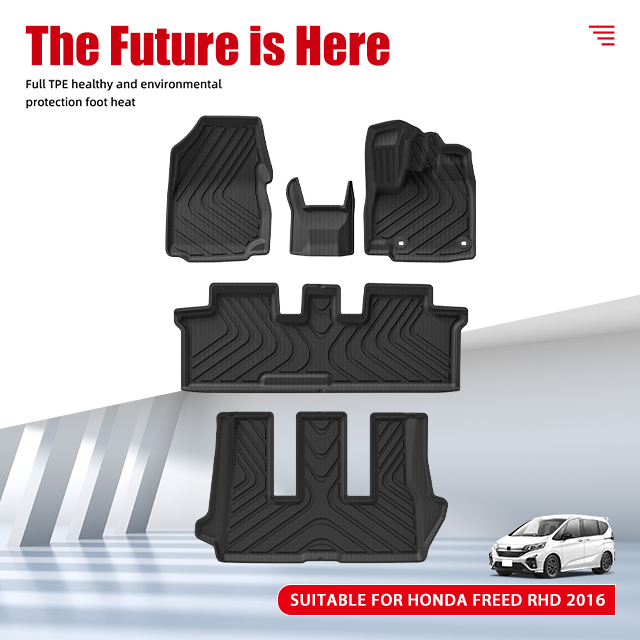
You can safely pressure wash these mats, but you must establish a strict operational safe zone. The absolute maximum pressure you should apply to a TPE surface is 1,500 PSI. Most electric pressure washers designed for home automotive detailing naturally fall into the 1,100 to 1,500 PSI range, making them ideal. Gas-powered washers often exceed 2,500 PSI and require extreme caution, throttle management, and distance adjustment to avoid destroying the mat.
Flow rate, measured in Gallons Per Minute (GPM), matters just as much as PSI. A flow rate of 1.2 to 1.8 GPM provides sufficient water volume to carry away heavy mud and debris without relying solely on aggressive pressure. Distance acts as your primary safety buffer. You must mandate a minimum standoff distance of 12 to 18 inches between the nozzle tip and the mat surface. Moving the wand closer exponentially increases the kinetic impact on the elastomer, risking immediate surface trauma.
The nozzle attached to your wand dictates the shape and intensity of the water blade. Using the wrong nozzle will ruin your mats in seconds. Never use 0-degree (red) or 15-degree (yellow) nozzles. These narrow tips concentrate all the pressure into a tiny point, acting as literal cutting tools on elastomers. They will slice through the top layer of your mat, exposing the inner core and ruining the structural integrity.
We strongly recommend 40-degree (white) nozzles for all interior automotive plastics and elastomers. The wider fan disperses the pressure over a larger surface area. This allows for broad, safe sweeping motions across the textured surface, lifting dirt efficiently without threatening the material.
Pressure Washer Nozzle Guide for TPE Mats | |||
Nozzle Color | Spray Angle | Impact Force | Safety Rating for TPE |
|---|---|---|---|
Red | 0° | Extreme (Pinpoint) | DO NOT USE - Will cut material |
Yellow | 15° | High (Chisel) | DO NOT USE - Causes micro-tears |
Green | 25° | Medium (Flushing) | Use with caution (Keep 18+ inches away) |
White | 40° | Low (Wash) | Safe (Recommended for all TPE) |
Standard TPE has a specific thermal deformation point. Because it is a thermoplastic, heat softens the polymer bonds, allowing it to be molded in the factory. Exposing the material to water temperatures above 140°F (60°C) reactivates this softening process. We advise strictly against using commercial heated pressure washers or steam cleaners directly on the plastic.
If you blast a custom-molded mat with 200°F water, the raised edges will sag, the retention clips will warp, and the mat will never fit your floorboard correctly again. Mandate cold or lukewarm water only. The mechanical force of the water and the chemical action of your soap are more than enough to clean the surface without relying on dangerous heat.
Executing a proper deep clean requires a systematic approach. Haphazardly blasting a dirty mat drives contaminants deeper into the texture and wastes time. Follow this exact sequence to restore your mats safely.
Pre-Rinse and Dry Debris Removal: Always remove dry debris before introducing water. Pull the mats out of the vehicle and shake them vigorously. Use compressed air or a stiff bristle brush to dislodge embedded sand, pine needles, and dried mud from the deep channels. Wetting dry dirt simply creates a thick slurry that sticks to the TPE, making it much harder to flush out later.
Chemical Application: Chemical interactions dictate the lifespan of elastomers. Harsh solvents, bleach, or heavy-duty engine degreasers cause TPE to dry out. They strip essential plasticizers, leading to premature cracking and a chalky white appearance. Apply a pH-neutral foaming automotive shampoo or a dedicated rubber/TPE cleaner.
Foam Cannon Integration: Attach a foam cannon to your pressure washer. Spray a thick, uniform layer of foam over the entire mat. Let the foam dwell for three to five minutes. The surfactants in the soap will encapsulate dirt particles and lift them away from the surface without requiring heavy mechanical scrubbing.
Agitation (If Necessary): For stubborn contaminants like dried clay or sticky road tar, use safe agitation methods. Take a soft-to-medium nylon detailing brush and lightly scrub the affected areas while the foam is still wet. You can use drill brushes, but keep them at very low RPMs to avoid friction burns on the plastic.
The Pressure Washing Phase: Switch to your 40-degree white nozzle. Adopt a top-to-bottom sweeping motion, pushing the dirty foam down and off the mat. Maintain a consistent 12 to 18-inch distance throughout the pass. Avoid lingering on single spots, as stationary pressure builds stress. Pay special attention to flushing out the deep channels and retention clip areas of your custom TPE car floor mat.
Drying and Inspection: Never leave mats to air dry in direct, intense sunlight. UV exposure combined with water droplets acts like a magnifying glass, causing localized fading and degradation. Use forced air from a leaf blower or dedicated car dryer to push water out of tight crevices instantly. Follow up with a clean microfiber towel to wipe away any remaining moisture.
Restoration and Re-installation: Ensure both the floor mat and the vehicle's underlying factory carpet are 100% dry before re-installation. Trapped moisture beneath the mat breeds mold, mildew, and severe odors. If the mat looks dull after cleaning, apply a water-based TPE protectant. This restores the OEM matte finish without creating a dangerous, greasy surface that could cause your feet to slip while driving.
Manufacturers engineer specific micro-textures into the surface of TPE mats to provide grip for wet shoes. Exceeding PSI limits or using narrow nozzles physically shears off this texture. This damage instantly ruins the non slip car floor mat functionality. Once you blast away the textured layer, the underlying plastic is incredibly smooth. Wet leather soles or rubber boots will slide dangerously across the surface, compromising your ability to operate the pedals safely.
The defining feature of a premium 3D car floor mat is its laser-measured, high-wall design. These raised edges trap spills before they reach the carpet. Hot water or excessive sustained pressure on these thin vertical walls compromises their structural integrity. The heat softens the plastic, and the pressure pushes it out of shape. Once the edges curl inward or sag outward, the laser-measured fitment is gone. Curled edges allow liquids to spill over onto the factory carpet, completely defeating the mat's primary purpose.
Modern vehicles use specific floorboard anchors to keep mats locked in place. TPE mats feature integrated retention rings that snap over these anchors. High-pressure water jets can easily blow out or deform these plastic rings if you aim directly at them from close range. Damaging the retention system creates a severe safety hazard. A loose mat can slide forward during heavy braking and jam the accelerator or brake pedals, leading to catastrophic accidents.
Not all TPE is manufactured equally. High-density TPE withstands years of pressure washing and heavy abuse. The best mats utilize injection molding, a process that forces molten TPE into a closed mold under massive pressure. This creates a uniform, dense structure with no weak points. Extruded or cheaper, low-density variants are essentially stamped out of flat sheets. These cheaper mats remain highly prone to pitting, surface tearing, and edge curling under pressure. Always check the product specifications for injection-molded construction before purchasing.
The physical design of the mat heavily impacts the ease of pressure washing. Deep, aggressive ridges trap thick mud and snow melt effectively, but they require precise nozzle angles to flush out completely. Shallow, flowing patterns clean much faster but hold less liquid volume. Evaluate your local climate and daily usage. Heavy snow regions and construction sites demand deep channels to keep water away from your boots. Urban environments and daily commuting suit shallower, easier-to-clean designs that require less effort during the weekend wash.
Review standard manufacturer warranties carefully before taking a pressure washer to your mats. Identify clauses related to improper maintenance or abuse. Many brands will void warranties if they detect heat warping, chemical staining from degreasers, or high-PSI slicing. Ensure compliance with manufacturer care guidelines. Documenting your use of 40-degree nozzles and pH-neutral soaps can help support a warranty claim if the mat fails prematurely due to a manufacturing defect.
A TPE floor mat safely handles pressure washing when you observe strict PSI and temperature limits. By keeping the pressure under 1,500 PSI, using a wide 40-degree nozzle, and avoiding hot water, you can easily blast away heavy grime without damaging the polymer structure. This makes TPE a highly maintainable and hygienic choice for serious vehicle protection. Follow these exact next steps to ensure your interior detailing remains safe and effective:
Audit your current pressure washer equipment immediately to confirm the maximum PSI output remains under 1,500.
Equip a 40-degree white nozzle and test the spray pattern on concrete before aiming it at your interior plastics.
Throw away harsh alkaline degreasers and invest in a dedicated, pH-neutral elastomer cleaner to prevent chemical drying.
Measure your standoff distance during the next wash, ensuring the wand tip never gets closer than 12 inches to the mat surface.
Prioritize custom injection-molded TPE mats with high Shore A hardness ratings for any future vehicle purchases to guarantee long-term durability.
A: Keep pressure under 1,500 PSI. Use a 40-degree nozzle and maintain a distance of at least 12 inches to prevent surface tearing.
A: No. TPE is a thermoplastic that can warp or lose its custom-molded shape when exposed to water temperatures exceeding 140°F (60°C). Always use cold or lukewarm water.
A: TPE mats do not typically have a "coating"; the non-slip property is engineered into the material's texture. However, using too high of a pressure (0-degree nozzle) can physically shave off this texture, making the mat slippery.
A: While most pure TPE mats are safe to pressure wash under 1,500 PSI, hybrid mats containing foam layers or glued carpet inserts should not be pressure washed as the water can cause delamination.
A: pH-neutral snow foam is highly recommended for lifting dirt safely. However, highly alkaline degreasers should be avoided as they can dry out the elastomers, leading to premature cracking and discoloration.
A: Pressure washing should be reserved for heavy soiling, typically once a month or after extreme weather exposure. For weekly maintenance, a simple garden hose and brush are sufficient and extend the lifespan of the mat.


