
Views: 0 Author: Site Editor Publish Time: 2026-07-31 Origin: Site


Folding down the rear seats expands cargo capacity, but exposes vulnerable factory upholstery to the harsh realities of heavy, abrasive, or dirty loads. Whether you transport construction materials, heavy tools, or outdoor gear, factory materials simply fail under industrial-level abuse. Vehicle owners often struggle to identify the right protective accessory, searching interchangeably for a cargo cover, rear seat protector, or fold-down trunk liner. This guide specifically evaluates the rigid, semi-flexible Seat Back Mat designed for seat-back installation. Standard carpeted seat backs and universal fabric covers fail under high shear forces. They absorb chemical and liquid spills while offering zero impact protection. This leads to permanent interior damage, tear-induced odor retention, and depreciated vehicle value. To mitigate these risks, you must evaluate whether a rigid, molded solution possesses the structural integrity, puncture resistance, and anchoring stability required for heavy-duty cargo hauling.
Material Reality: TPE (Thermoplastic Elastomer/Rubber) offers superior structural rigidity, chemical resistance, and waterproofing compared to carpet or canvas, but inherently possesses a lower coefficient of friction than pure rubber, requiring specific surface texturing to function as a truly non slip seat back mat.
Structural Necessity: For heavy loads, a custom-molded 3D seat back mat is critical; flat, universal mats fail to distribute weight evenly and lack the raised edges necessary for liquid containment.
Hinge-Gap Vulnerability: The intersection between the cargo floor liner and the rear seat back protector is a prime point for debris and liquid entry, requiring coordinated coverage.
Anchoring Vulnerabilities: The primary failure point of any seat back protector under heavy load is the anchoring system (Velcro vs. mechanical straps) failing during hard braking.
Decision Criteria: Selecting the right mat requires balancing puncture resistance (where TPE excels) with cargo grip (where natural rubber excels), depending on the specific type of heavy cargo being transported.
Heavy cargo contact involves transporting items that exert 50 or more pounds of concentrated weight, feature sharp edges from metal toolboxes, or present abrasive surfaces like rough lumber, heavy machinery, and cinder blocks. When you load these items directly onto folded factory seats, the potential for rapid interior degradation is high. Heavy items shifting during transit apply lateral shear stress to the seat back. This constant friction tears standard fabric and degrades the underlying foam padding over time. If you haul construction debris or landscaping supplies, the grit acts like sandpaper against the factory carpet.
Concentrated point loads pose a severe threat to vehicle interiors. Metal table legs, heavy equipment corners, and jagged tools easily pierce standard upholstery when the vehicle hits a bump or stops suddenly. The physics of a sudden stop means a 40-pound air compressor can exert hundreds of pounds of force on a single square inch of your folded seat. Without a rigid barrier, that force punches straight through the fabric and destroys the internal seat foam.
Beyond physical tearing, leaking fluids such as oil, paint, harsh chemicals, or melting snow from outdoor gear create secondary damage. Physical tears in the factory cargo fibers allow moisture and heavy soils to absorb instantly into the seat structure. This leads to deep structural cabin odors and potential sub-floor rust. You need a baseline requirement for a true waterproof seat back protector to shield the cabin environment from these liquid threats. Once dirty motor oil or stagnant water soaks into the seat foam, you cannot extract it completely. The vehicle will retain that smell permanently.
Thermoplastic Elastomer (TPE), also commercially classified as thermoplastic rubber (TPR), serves as a hybrid material combining the flexibility of rubber with the manufacturing precision of plastic. This composition gives TPE distinct advantages when subjected to heavy cargo loads. Analyzing TPE's durometer ratings reveals its exceptional ability to deflect sharp impacts and resist tearing under heavy, jagged loads compared to pure rubber or silicone alternatives. It acts as a semi-rigid shield that distributes the force of a sharp corner over a wider area.
A primary consumer complaint regarding TPE is that its surface can feel slick and plastic-like, causing items to slide during transit. To counter this, manufacturers engineer a non slip seat back mat using micro-texturing, raised ridges, and dedicated friction zones to compensate for TPE's natural smoothness. These textures interlock with the feet of toolboxes or the rough edges of cargo to provide mechanical grip, even if the material itself lacks the tacky feel of natural rubber.
Furthermore, TPE demonstrates excellent thermal stability in extreme vehicle cabin temperatures. It prevents warping, bubbling, or softening in intense summer heat, and resists cracking under heavy impact in freezing winter conditions. If you leave a heavy generator resting on a TPE mat in a hot car, the material will not melt or permanently deform. In sub-zero temperatures, dropping a heavy load onto the mat will not cause it to shatter, ensuring year-round reliability for contractors and outdoor enthusiasts alike.
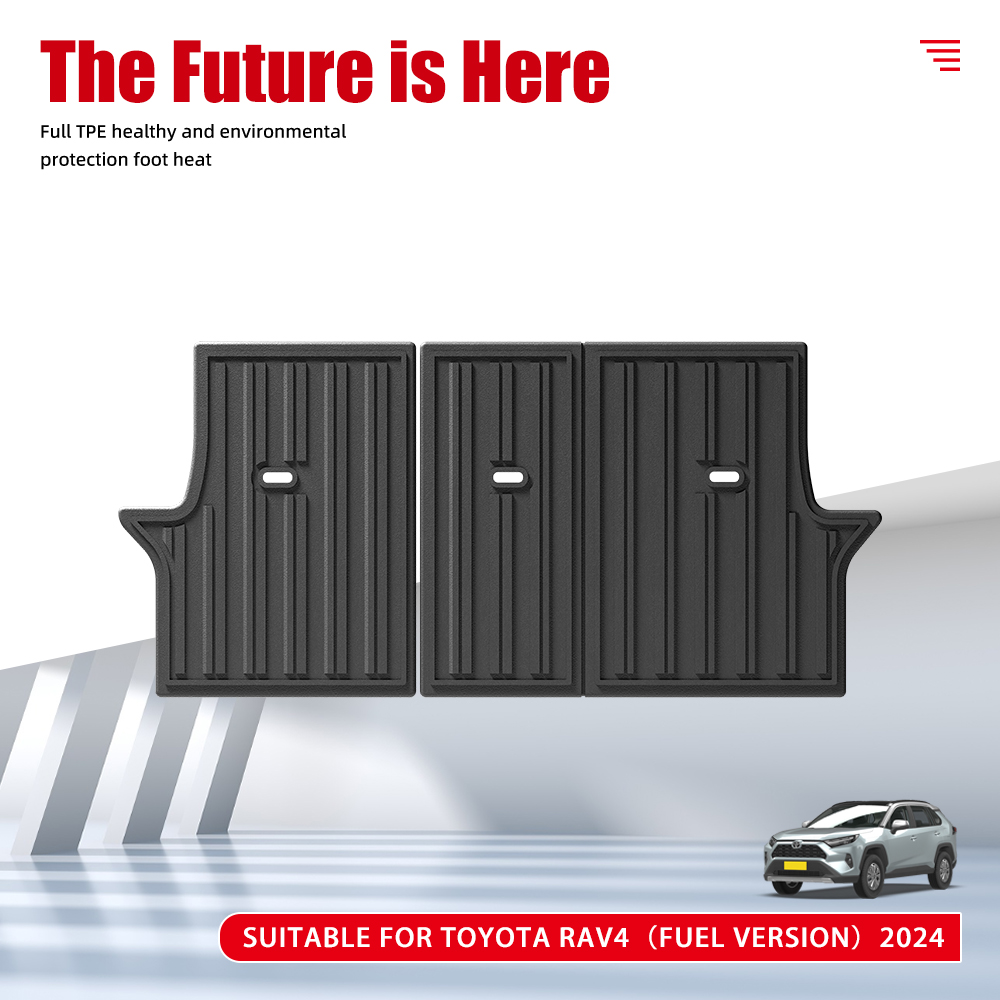
Contrasting flat, cut-to-fit mats with laser-measured, injection-molded 3D designs highlights significant differences in performance. A custom-molded 3D seat back mat features raised edge lips that actively prevent liquid runoff. When transporting heavy, wet cargo like generators, coolers, or soaked outdoor gear, these raised edges stop fluids from seeping into the vulnerable seat hinges or floorboards. A flat mat simply allows water to roll off the sides and down into the mechanical components of the seat.
A rigid 3D structure effectively bridges the physical gaps between folded seats and the cargo floor. This load distribution prevents heavy items from sinking into crevices and damaging delicate seat folding mechanisms. If you slide a heavy sheet of plywood across the cargo area, a 3D mat provides a continuous, flat surface. Without it, the plywood catches on the gap between the trunk floor and the folded seat, tearing the upholstery and potentially bending the seat frame.
Additionally, 3D designs are engineered to accommodate 60/40 or 40/20/40 split seats perfectly. This allows for independent seat operation, meaning you can raise or lower individual seats without needing to remove the rear seat back protector. The laser-measured fit ensures that the mat does not bind or pinch when the seat articulates, maintaining full functionality of the vehicle's interior layout while providing maximum protection.
Providing a direct comparative analysis helps vehicle owners make informed decisions based on their specific hauling needs. TPE is lightweight, odorless, and retains its shape flawlessly over time. Heavy-duty natural rubber offers superior grip, preventing cargo slide more effectively. However, rubber is highly susceptible to UV degradation, adds significant weight to the vehicle, and often suffers from chemical off-gassing that leaves a lingering odor in the cabin.
When comparing TPE to ballistic nylon or canvas covers, TPE provides rigid impact protection and allows for an easy wipe-down cleaning process. Heavy-duty fabrics are machine-washable and puncture-resistant, but they completely lack structural rigidity and spill containment capabilities. Factory carpet mats are entirely insufficient for heavy cargo due to their immediate fluid absorption, odor retention, and zero impact resistance.
Material Type | Puncture Resistance | Spill Containment | Grip Level | Maintenance Difficulty |
|---|---|---|---|---|
TPE (Thermoplastic Elastomer) | High | Excellent (with 3D lips) | Moderate (relies on texture) | Low (wipe or hose off) |
Heavy-Duty Natural Rubber | High | Good | High | Moderate (heavy to remove) |
Ballistic Nylon / Canvas | Moderate | Poor (absorbs eventually) | Low | High (requires machine washing) |
Factory Carpet | Low | None | Moderate | High (requires extraction) |
Individual seat back mats must interface smoothly with the main trunk floor liner to provide comprehensive protection. Systems that offer continuous protection from the cargo floor base straight up the back seats are ideal. They prevent dirt, gravel, and heavy items from sliding into the hinge gap during the loading and unloading process. If you dump a load of firewood into the back of your SUV, bark and splinters will inevitably find their way into any exposed crevices.
Vehicle owners must choose between overlapping and segmented configurations. Overlapping flaps provide better continuous coverage against spills and debris but can complicate the process of folding the seats up and down. Completely independent segmented pieces allow for easy multi-passenger split-seat configurations but leave minor gaps where fine dirt might eventually settle. You must evaluate how frequently you adjust your seating configuration versus how messy your typical cargo is.
Installing and using protective mats under high-stress cargo conditions presents physical realities that must be managed. The reliability of the anchoring system is paramount. Automotive-grade Velcro (hook-and-loop) backings are common, but heavy cargo sliding forward during emergency braking can generate enough force to rip Velcro-anchored mats directly off the seat back. Headrest straps offer a more secure mechanical connection for heavy loads, anchoring the mat to the solid steel posts of the headrest.
Aggressive Velcro backing carries the risk of damaging factory carpet or leather over time through repeated removal and adjustment. If you constantly rip the Velcro off the seat back, it will eventually fray the factory fibers. Long-term maintenance of a TPE seat back mat exposed to heavy soils, grease, or chemical spills involves specific steps to ensure longevity.
Remove the mat entirely from the vehicle to prevent water or cleaning agents from soaking into the factory upholstery.
Use a high-pressure hose or power washer to blast away caked-on mud, gravel, and construction debris.
Apply a mild, non-abrasive detergent and scrub with a stiff-bristled brush to break down grease or oil stains.
Rinse thoroughly and allow the mat to air dry completely before reinstalling it in the vehicle.
Strictly avoid applying silicone-based interior protectants, as they drastically increase surface slickness and defeat any built-in anti-slip texturing.
Verify your vehicle's exact seat-split configuration before purchasing to ensure full articulation of the rear seats without interference.
Check for integrated cargo tie-down accessibility to properly secure heavy loads and prevent dangerous shifting during transit.
Prioritize laser-measured 3D options over universal flat fits to guarantee maximum spill containment and gap coverage.
Inspect the anchoring system to ensure it utilizes headrest straps or heavy-duty fasteners that can withstand emergency braking forces.
A: Cargo covers typically shield trunk contents from view. Cargo liners protect the flat floor of the trunk area. Seat back mats specifically protect the folding rear seat backs when they are expanded forward for extra storage capacity.
A: TPE has friction limitations compared to natural rubber. To prevent sliding, choose mats engineered with textured surfaces and micro-ridges, and always use mechanical cargo tie-downs for heavy items.
A: TPE features high tensile strength and excellent resistance to tearing. While extreme point-loads can cause permanent indentation in the material, they rarely puncture completely through to the upholstery.
A: Most attach using automotive-grade Velcro that grips the factory carpet securely. Others utilize headrest straps, which are especially useful for vehicles with leather seat backs where Velcro cannot adhere.
A: Yes. 3D molding provides structural rigidity, bridges vulnerable gaps between folded seats, and features raised edges for superior spill containment that flat mats simply lack.
A: Waterproofing translates directly to easier cleaning. It blocks fine dust, dirt, and accidental chemical transfers from dry goods from embedding permanently into the factory upholstery.
A: Custom-fit split-design mats allow full articulation of the seats. You can fold them up or down independently for passengers without needing to remove the protective mat.


