
Views: 0 Author: Site Editor Publish Time: 2026-06-18 Origin: Site


Every time you step into your vehicle, you track in a piece of the outside world. Seasonal elements rapidly degrade vehicle interiors. Snow, road salt, mud, and everyday spills accelerate wear. This constant exposure directly impacts your driving experience. It also lowers your vehicle's long-term resale value. For years, drivers accepted a frustrating compromise. Universal rubber mats lack adequate coverage. Factory carpet mats act like sponges and lack moisture resistance. Fortunately, the automotive industry has evolved. We now rely on the TPE floor mat as the standard for interior protection. Thermoplastic Elastomer offers a precision fit and high durability. It outsmarts harsh weather. This article breaks down exactly how TPE works. You will learn how it compares to legacy materials. We also cover strict criteria to evaluate before making a purchase. You can confidently upgrade your cabin defense today.
Structural Containment: A true 3D TPE car mat utilizes raised edges and laser-scanned dimensions to trap fluids rather than just covering the floorboard.
Thermal Stability: Unlike PVC or basic rubber, TPE maintains flexibility in sub-zero temperatures and resists warping under high cabin heat.
Safety Compliance: Purpose-built non-slip car mat backing and factory retention clips prevent pedal interference, a common risk with aftermarket alternatives.
Thermoplastic Elastomer (TPE) represents a massive leap in polymer engineering. It operates as a true hybrid material. It combines the flexible elasticity of traditional rubber and the structural rigidity of durable plastics. Engineers value this precise blend. It creates a robust, impenetrable barrier against daily wear. Furthermore, manufacturers easily recycle TPE at the end of its useful lifecycle. This makes it a highly sustainable and eco-friendly choice for modern drivers.
High-quality TPE prioritizes your health and daily comfort. It remains completely free from heavy metals, legacy PVC, and harmful phthalates. In enclosed, hot car cabins, basic plastics often release toxic Volatile Organic Compounds (VOCs). These dangerous gases cause headaches and leave a lingering chemical smell. TPE does not release any VOCs. You breathe clean air, even during peak summer heat.
When assessing durability metrics, we look closely at tensile strength and abrasion resistance. TPE scores exceptionally high in both engineering categories. It resists tearing under heavy, repeated friction from boots and shoes. You should, however, keep realistic expectations regarding the surface finish. Sharp debris like metal sports cleats might leave minor cosmetic scratches. Still, the underlying structural integrity remains fully intact. You never lose the protective barrier.
Best Practice: Regularly inspect your footwear for sharp stones embedded in shoe treads. Removing them prevents deep surface gouging.
Understanding the fundamental difference between water-resistant and waterproof materials is crucial. Factory carpets are merely water-resistant. They eventually soak up excess moisture. A true waterproof car floor mat naturally repels liquids at the molecular level. Spilled coffee, heavy rain, or melted snow simply beads up on the surface. The liquid absolutely cannot penetrate the protective barrier.
Protection also relies heavily on smart physical geometry. High-walled, laser-measured designs create a reliable 3D containment architecture. You need a 3D TPE car mat to actively trap moving fluids. Deep channeling grooves and raised ridges play a vital role. They actively direct muddy water away from your resting shoes. This specific channeling keeps your footwear dry. It also maintains safe pedal traction while driving on the highway.
TPE exhibits remarkable resilience across extreme temperature fluctuations:
Winter Conditions: Freezing temperatures cause basic rubber to stiffen and curl. TPE maintains complete flexibility. It actively resists cracking in harsh sub-zero weather.
Summer Conditions: Direct UV exposure magnifies cabin heat. TPE resists melting, warping, and off-gassing under intense sunlight streaming through windows.
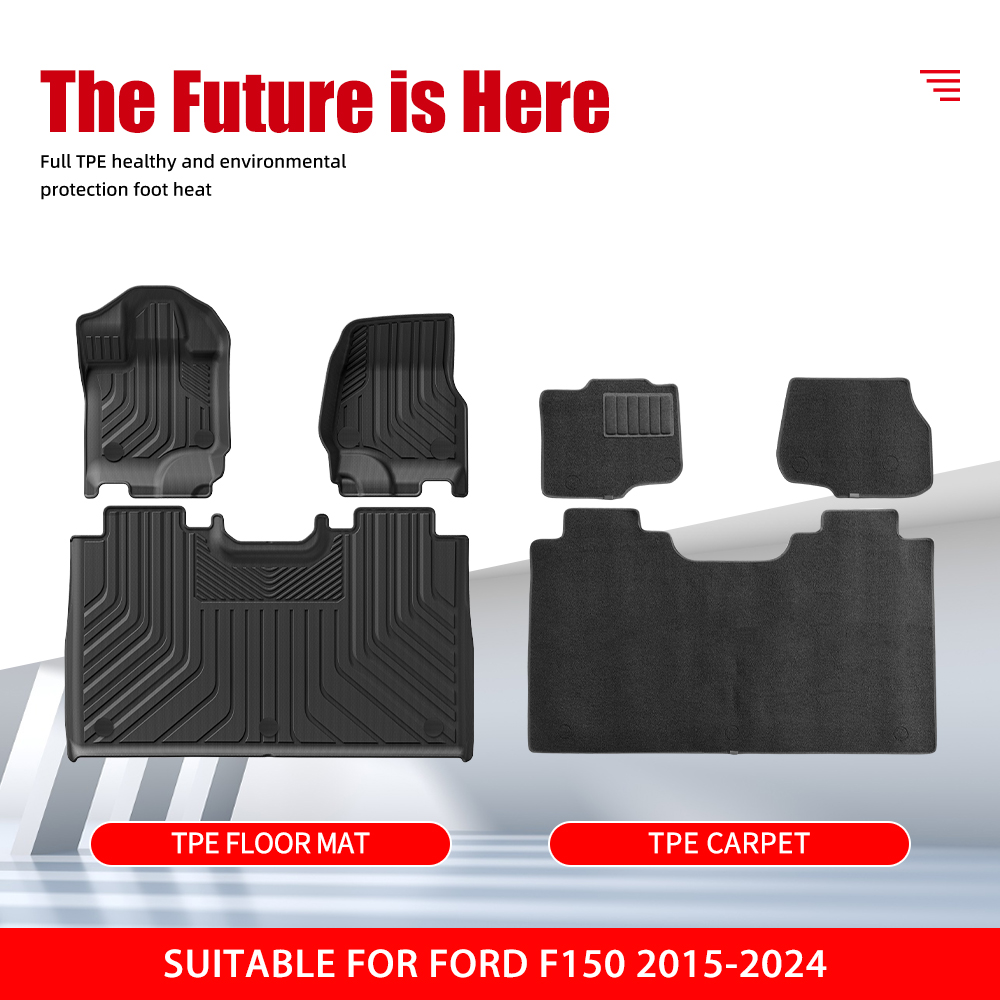
Many drivers struggle to choose the right interior protection. Analyzing different materials clarifies the decision. Traditional rubber serves as a common baseline. Rubber is notoriously heavy and prone to UV fading over time. It also holds a distinct, permanent odor. TPE offers a superior alternative. It feels lighter, remains scent-free, and holds a much more precise molded fit.
We must also consider PVC. PVC acts as the budget, legacy alternative in the automotive market. It presents several severe drawbacks. PVC hardens instantly in cold weather. It frequently cracks after a few seasons of use. It also poses notable environmental and odor concerns. TPE easily outlasts PVC in every measurable metric.
Original Equipment Manufacturer (OEM) carpet looks nice on the showroom floor. Carpet provides some acoustic dampening. It also creates a cozy aesthetic. Unfortunately, it acts as a massive sponge. It absorbs liquid damage, road salt stains, and hidden mold. TPE provides the necessary impermeable barrier to stop this destruction.
To help you justify the upgrade, review the decision matrix below:
Material Category | Lifespan Expectancy | Maintenance Level | Odor Potential | Weather Resistance |
|---|---|---|---|---|
TPE | 5+ Years | Low (Easy Wipe/Rinse) | Zero | Excellent (All-Weather) |
Rubber | 3-5 Years | Medium (Requires Scrubbing) | High (Toxic Smell) | Good |
PVC | 1-2 Years | Medium | Very High (Chemical) | Poor (Cracks in Cold) |
OEM Carpet | 2-3 Years | High (Extraction Needed) | High (Mildew Risk) | None (Absorbs Water) |
A poorly fitted floor accessory presents a critical safety hazard. Universal mats often slide forward during hard braking. They can easily obstruct the brake or accelerator pedals. Modern engineering permanently solves this dangerous issue. Manufacturers now engineer TPE accessories using advanced 3D vehicle scanning technology. They map every single contour of your specific vehicle footwell. This digital precision ensures a millimeter-perfect fit.
A proper mechanical anchoring system keeps everything perfectly stationary. You must secure a reliable non-slip car mat to guarantee complete driver safety. Look closely at the designated connection points. High-quality designs guarantee full compatibility with OEM floor posts and factory retention hooks. They also feature dedicated anti-skid nibs on the underside. These specialized nibs grip the factory carpet firmly. They prevent lateral movement entirely.
Common Mistake: Do not install new mats directly over existing factory carpet mats. Always remove the original carpet layers first. You must engage the locking posts securely against the bare floorboard.
You should note a minor, yet common, installation caveat. Manufacturers often fold new accessories for compact shipping purposes. They might look slightly misshapen straight out of the delivery box. Simply lay them flat in a warm room. You can also leave them under direct sunlight. They typically require 24 to 48 hours to relax. They will quickly conform perfectly to your unique footwell geometry.
Routine cleaning keeps your interior looking brand new. You can easily wash standard dirt away with a garden hose. Heavy road tar or greasy mud requires a bit more attention. Use a mild dish soap or a specialized automotive surface cleaner. Gently scrub the channels with a soft bristle brush.
Common Mistake: Always avoid harsh silicone-based tire dressings. They make the surface dangerously slippery and severely compromise your shoe grip.
Maintaining a pristine cabin directly protects your financial investment. Vehicle appraisers always check the condition of the factory floor carpet. Deep salt stains and hidden mold severely lower vehicle appraisal values. A one-time upgrade to high-end TPE prevents costly carpet replacements. You completely avoid paying for expensive deep-extraction detailing before selling your vehicle.
Not all protective accessories deliver the same exact results. You need a structured framework to evaluate your options. First, consider the manufacturing method. Brands generally use two primary production techniques:
Vacuum Forming: This process heats a flat sheet of material and pulls it over a shaped mold. It creates thinner, more budget-friendly products.
Injection Molding: This process injects molten material directly into a closed 3D cavity. It produces thicker, heavier mats with vastly superior durability.
Next, always verify material purity. Some budget brands blend pure polymers with recycled scrap plastics. This significantly compromises the overall product lifespan. You want to confirm the use of pure TPE or TPO (Thermoplastic Olefin). Pure materials maintain their elasticity and resist cracking.
Finally, evaluate the manufacturer's warranty and customer support. Reputable brands stand firmly behind their engineering. Look for multi-year or lifetime guarantees. The warranty should specifically cover structural defects like cracking, curling, and warping.
Upgrading your vehicle interior requires a strategic approach. A custom-molded interior shield is not just a decorative accessory. It serves as an active defense system against harsh, unpredictable weather conditions. We see clear evidence supporting this material evolution. Drivers in pristine, consistently dry climates might temporarily survive with basic carpet. However, reality demands more for most people. Any region experiencing rain, snow, or active outdoor lifestyles requires engineered resilience. TPE delivers that exact protection. We encourage you to take proactive steps today. Verify your specific vehicle make, model, and production year. Find a precision-molded set tailored precisely to your cabin specifications. Protecting your interior ensures a safer, cleaner, and more enjoyable driving experience.
A: High-quality TPE remains completely thermally stable. It will not melt, warp, or lose its shape. It also refuses to emit toxic VOC odors, even when parked in peak summer cabin temperatures. You can confidently leave them in your vehicle year-round without experiencing chemical smells.
A: Most loose debris washes off instantly with a high-pressure hose. For stubborn winter salt, mix a diluted white vinegar solution or mild dish soap. Scrub gently with a soft bristle brush to restore the original matte finish. Never apply glossy tire shines, as they create a dangerous slipping hazard.
A: Yes, they are significantly better for modern vehicles. TPE provides the exact same waterproof benefits as traditional rubber. However, it allows for much deeper 3D molding and raised edges. You get a lighter product, a more precise fit, and absolutely zero lingering rubber odor.
A: No, they do not. A properly fitted TPE design utilizes exact floorboard laser contours. It features underside anti-skid grip textures and integrates directly with your factory retention clips. This three-point anchoring system ensures the accessory remains completely stationary beneath your feet.


