
Views: 0 Author: Site Editor Publish Time: 2026-07-29 Origin: Site


Transporting heavy equipment places immense localized stress on vehicle cargo areas. Industrial tools, generators, and commercial machinery often cause permanent interior damage when loaded directly onto factory flooring. Fluid leaks and unsafe load shifting frequently occur during transit, creating hazards for drivers and fleets. Traditional cargo protection solutions fail under these heavy point-loads. Standard rubber or carpet compresses permanently, tears under shear stress, or curls at the edges. This damage compromises vehicle resale value and violates cargo securement protocols. Thermoplastic Elastomer (TPE) bridges the gap between industrial-grade load securement and consumer automotive protection. Buyers can evaluate the material science behind a high-quality Trunk Mat to understand how engineered polymers maintain dimensional stability. TPE prevents cargo shifting under extreme weight and supports safe, efficient transport for heavy hauling operations.
Structural Memory: TPE utilizes cross-linked polymer structures that provide high compression resistance, allowing the material to rebound to its original shape even after bearing heavy, static loads for extended periods.
Load Distribution & Consolidation: Rigid core construction combined with flexible surface tension prevents heavy items from creating permanent indentations or piercing the vehicle's OEM flooring while helping to consolidate weight safely.
Friction and Securement Regulations: Engineered surface channels in a non slip trunk mat increase the coefficient of friction, acting as a secondary securement measure to prevent heavy cargo from shifting during transit in alignment with transit safety standards.
Edge Integrity: High-quality, laser-measured 3D rear trunk mat liners maintain their vertical edge rigidity, ensuring that heavy, shifting items do not collapse the protective perimeter.
Payload Efficiency: The lightweight nature of TPE compared to heavy vulcanized rubber maximizes available payload capacity without sacrificing structural integrity.
Buyers need a material offering the flexibility of rubber for easy installation alongside the tensile strength of plastic. This strength supports heavy, concentrated weights like metal toolboxes, air compressors, or welding machinery. Traditional materials force a compromise on the job site. Hard plastics slide dangerously and crack under impact when you drop a wrench. Soft rubber grips well but gouges easily when you drag a heavy crate across the bed. You need a solution balancing both extremes. TPE delivers this exact balance. It handles heavy point-loads without permanent deformation, ensuring your cargo area remains intact after years of abuse.
When evaluating materials for heavy-duty use, you have to look at how they handle real-world stress. A standard rubber mat might look thick, but it lacks the internal structure to resist tearing. If you slide a 200-pound generator across it, the rubber bunches up and rips. TPE behaves differently. Its engineered composition allows it to stretch slightly under load and then snap back. This makes it ideal for contractors and fleet managers who load and unload heavy gear daily.
TPE features a unique multiphase composition. It combines crystalline and amorphous polymers at the molecular level. This structure allows it to stretch and compress safely without breaking molecular bonds under stress. We call this characteristic "shape memory." You can leave a heavy generator on the mat for weeks. The material compresses under the weight, absorbing the localized pressure. Once you remove the cargo, the polymers pull back. They return to their exact molded shape within hours. This prevents permanent divots in your cargo area.
The science behind this involves cross-linking. In traditional plastics, heavy weight permanently displaces the molecules. In TPE, the flexible amorphous regions absorb the impact, while the rigid crystalline regions maintain the overall structure. This dual-action response is why TPE outlasts standard materials in commercial applications. It acts like a heavy-duty shock absorber for your vehicle's floor.
We must compare TPE against PVC and traditional vulcanized rubber to understand its superiority. PVC feels rigid but cracks in cold weather, especially when struck by heavy metal tools. Vulcanized rubber stays flexible but tears easily under shear stress. TPE resists tearing under extreme shear stress. Dragging heavy equipment across the cargo area destroys standard rubber. TPE withstands this abrasion effortlessly. It maintains its structural integrity across temperature extremes, from freezing winter mornings to scorching summer afternoons.
Material Feature | TPE (Thermoplastic Elastomer) | Vulcanized Rubber | PVC (Polyvinyl Chloride) |
|---|---|---|---|
Tensile Strength | High (Resists tearing under load) | Medium (Prone to shear tearing) | High (But brittle in cold) |
Shape Memory | Excellent (Rebounds fully) | Poor (Permanent indentations) | Poor (Warps under heat) |
Weight Profile | Lightweight | Very Heavy | Medium |
Chemical Resistance | High (Repels oil and gas) | Low (Absorbs fluids) | Medium |
Substituting heavy rubber liners with a lightweight TPE trunk mat optimizes vehicle weight. It directly impacts your gross vehicle weight rating (GVWR). Lighter protective gear allows for more heavy cargo capacity. It also improves overall fleet fuel efficiency. Every pound saved on accessories equals a pound gained for payload. TPE provides maximum protection at a fraction of the weight of traditional thick rubber mats.
For commercial fleets, payload optimization is critical. If you install heavy rubber mats in 50 vehicles, you are hauling thousands of pounds of dead weight. TPE eliminates this inefficiency. It gives you the heavy-duty floor protection required for hauling construction materials without eating into your legal payload limits. This efficiency translates directly to better fuel economy and reduced wear on vehicle suspension components.
You must define the technical specifications required for heavy hauling. Focus specifically on material thickness (gauge) and durometer (hardness) ratings. A low durometer means the mat is too soft. It will puncture under sharp metal edges, like the feet of an air compressor. A high durometer makes the mat too slick, causing cargo to slide dangerously. The ideal TPE blend sits right in the middle. It offers enough give to grip cargo bases while retaining enough rigidity to prevent floorboard damage.
When selecting a mat for industrial use, consider the specific types of loads you carry. If you transport wooden crates, you need high abrasion resistance. If you haul metal machinery, you need high puncture resistance. TPE handles both scenarios effectively. Its engineered surface can be customized during the molding process to provide specific textures that match your hauling requirements.
TPE distributes localized weight across a wider surface area. We call this managing point-loading. A heavy compressor resting on four small feet creates extreme point-loading. TPE prevents the mat from bottoming out. It protects the fragile sub-floor beneath. This weight consolidation stabilizes heavy loads during transit. It prevents the cargo from rocking or tipping over when you navigate tight corners or uneven job site terrain.
To maximize compression resistance, follow these load management steps:
Place the heaviest items directly over the vehicle's structural cross-members.
Use flat wooden boards under machinery with sharp metal feet to distribute the weight further.
Ensure the TPE mat is completely flat before loading to prevent stress fractures in the material.
Strap top-heavy items securely to the vehicle's factory tie-down points.
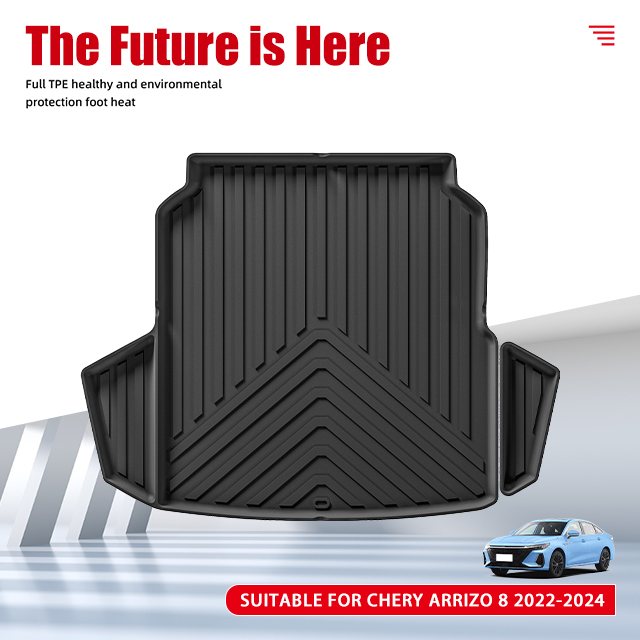
Three-dimensional, injection-molded structures possess higher structural rigidity than flat-cut mats. A 3D rear trunk mat features vertical walls and molded ridges. These elements act as structural ribs. They reinforce the flat load floor against deformation. When heavy cargo pushes down, the ridges distribute the force outward. This design keeps the entire mat completely flat and secure under extreme pressure.
The vertical walls do more than just contain spills. They provide lateral support to the flat section of the mat. Think of it like an I-beam in construction. The vertical components add massive strength to the horizontal plane. This means a 3D TPE mat can support significantly more weight without buckling compared to a flat sheet of the exact same material.
Load shifting follows basic physics. TPE utilizes tactile surface properties and engineered tread patterns. These patterns interlock with cargo bases to reduce lateral movement. A high-quality non slip trunk mat supports standard mechanical tie-down securement practices. The friction holds the base steady while the tie-downs secure the top. This combination prevents dangerous cargo rotation during transit.
The surface texture of the mat plays a massive role in securement. Deep channels and raised blocks create mechanical interference with the bottom of your cargo. If a wooden pallet tries to slide, it catches on these raised TPE blocks. This reduces the strain on your ratchet straps and keeps the load exactly where you placed it.
Utilizing a high-friction mat acts as a critical auxiliary tool. It helps meet strict cargo securement regulations. It reduces the risk of transport violations. Dynamic cargo shifts during sudden braking or cornering cause severe accidents. The TPE surface acts as a secondary friction barrier. It keeps your load compliant and your drivers safe on the road.
FMCSA regulations require that cargo be immobilized or secured to prevent shifting. While straps and chains are the primary securement methods, the floor's friction coefficient is factored into the overall securement calculation. A TPE mat with a high friction rating means you need fewer tie-downs to achieve the required securement strength, saving time during loading and unloading.
Heavy cargo often introduces environmental contaminants. You will deal with oil, mud, fuel, and water on a daily basis. A waterproof rear trunk mat uses a closed-cell, non-porous structure. This prevents any liquid absorption. The material does not soften, swell, or degrade. It maintains its load-bearing structural integrity over time. Spilled hydraulic fluid wipes right off without weakening the polymer bonds.
Traditional carpet or cheap rubber absorbs these fluids. Once oil penetrates rubber, it breaks down the chemical structure, causing it to crumble under heavy weight. TPE's closed-cell nature means fluids stay on the surface. You can haul leaky chainsaws or muddy trenchers without worrying about the mat losing its strength or permanently staining your vehicle's interior.
We must contrast universal trim-to-fit mats with digitally scanned liners. Universal mats never fit perfectly. They leave gaps and overlap edges. Vehicle-specific liners offer exact dimensional accuracy. For heavy hauling, this accuracy is non-negotiable. A poor fit compromises the load-bearing capacity of the entire floor.
When you place a 500-pound load on a universal mat that doesn't sit flush, the mat stretches over the gaps in the floor. This creates immense tension in the material, leading to premature tearing. A custom-scanned mat supports the load evenly because it perfectly matches the steel floor pan beneath it.
Edge failure happens when cargo catches a loose mat border. A precise custom trunk liner eliminates voids between the mat and the interior walls. Without these voids, heavy cargo cannot push the mat out of alignment. It cannot crush unsupported edges. The vertical walls sit flush against the plastic trim. This creates a reinforced perimeter that withstands heavy impacts from sliding gear.
Edge curling is a massive safety hazard. If the edge of the mat curls up, it becomes a trip hazard when loading. It also allows dirt and water to get underneath the mat, defeating the purpose of having a liner. Custom TPE liners use rigid vertical walls that lock into the vehicle's interior geometry, making curling physically impossible.
Exact OEM floor matching is an absolute necessity. If a mat bridges a gap in the floor contour, it creates a weak point. It does not sit flush against the hard surface below. Heavy cargo will eventually fracture the material. It will permanently crease the mat under extreme downward force. Digital laser scanning ensures zero bridging occurs.
The manufacturing process for these custom liners involves 3D scanning the exact vehicle model. Engineers map every contour, tie-down hook, and seat track. The resulting TPE mat drops in perfectly. This exact fitment means the mat acts as a direct extension of the vehicle's floor, providing maximum support for heavy industrial loads.
Extreme temperature fluctuations present implementation risks. TPE remains highly stable in most conditions. However, prolonged exposure to extreme cabin heat combined with heavy static loads tests material limits. You must mitigate this risk. Advise on proper load distribution techniques. Use heat-reflective vehicle parking strategies. Never leave sharp, heavy objects resting on the mat in a 140-degree cabin for extended periods without a distribution board.
If you operate in extreme desert climates, the interior of a closed vehicle gets hot enough to soften even the toughest polymers. While TPE won't melt like cheaper plastics, a 300-pound point load on a softened mat can cause deep indentations. Simply cracking the windows or parking in the shade preserves the mat's structural rigidity.
Weigh the higher initial cost of injection-molded TPE against lifecycle replacements. Cheaper rubber mats tear, warp, or off-gas toxic chemical fumes under heavy use. You will replace them constantly. TPE requires a larger upfront investment. It pays for itself by lasting the lifetime of the vehicle. It protects the resale value of your cargo space.
Consider the cost of replacing a damaged OEM cargo floor. A heavy tool dropped on an unprotected floor can dent the steel and tear the factory carpet. The repair costs far exceed the price of a premium TPE liner. The investment in TPE is an investment in your vehicle's long-term residual value.
TPE requires minimal but necessary maintenance. Pressure wash the mat to remove embedded grit. Avoid harsh chemical solvents that might degrade the surface friction. Clean up industrial spills promptly. This routine maintains the structural elasticity of the TPE. It ensures years of reliable, heavy cargo transport without material failure.
Maintenance steps for heavy-duty users:
Remove the mat entirely once a month to clean the factory floor underneath.
Use a mild detergent and a stiff brush to remove dried mud from the traction channels.
Inspect the mat for deep gouges after hauling sharp metal debris.
Rinse away battery acid or harsh chemicals immediately with copious amounts of water.
Measure the footprint and weight of your most frequently hauled heavy equipment to determine the required mat thickness.
Verify your vehicle’s exact make, model, and year to ensure you purchase a perfectly flush custom liner.
Select a heavy-duty TPE mat with raised edges to contain industrial fluid spills effectively.
Implement proper load distribution techniques, using wooden boards under sharp metal feet to prevent point-loading damage.
A: High-quality TPE features structural memory. While heavy point-loads may cause temporary indentation, the material is engineered to rebound to its original shape once the cargo is removed, provided it is not subjected to sharp, piercing metal edges.
A: A 3D mat utilizes raised structural ridges and a custom-molded perimeter. These features not only increase the overall rigidity of the mat under weight but also create physical barriers that, combined with the material's friction, significantly reduce cargo sliding.
A: Thermoplastic Elastomers are formulated to withstand high cabin temperatures (often up to 140°F or higher) without losing their structural integrity. Unlike PVC, TPE will not permanently warp or melt under standard heavy loads in hot climates.
A: Yes. The closed-cell structure that makes the mat waterproof also prevents the absorption of ambient humidity and accidental chemical spills (like grease, oil, or hydraulic fluids from tools), which can degrade lesser materials and weaken their load-bearing capacity.
A: The effectiveness comes from the TPE's durometer (softness/hardness ratio) combined with engineered surface textures. This creates a high coefficient of friction that grips the base of heavy items, acting as a critical supplement to primary cargo tie-downs to comply with safety transit guidelines.
A: No. One of the main advantages of TPE over traditional vulcanized rubber is its high strength-to-weight ratio. It provides heavy-duty protection and high load resistance while remaining lightweight, helping to conserve your vehicle's payload capacity for actual cargo.


