
Views: 0 Author: Site Editor Publish Time: 2026-07-28 Origin: Site


Transporting groceries introduces specific, recurring risks to a vehicle's cargo area, including shattered glass, leaking liquids, and crushed fragile items caused by sudden stops or sharp turns. Factory vehicle carpeting offers zero friction to stabilize loads and acts as a sponge for spills, leading to permanent stains, mold, and residual odors that degrade vehicle resale value. When you load heavy canned goods next to fragile produce, the lack of floor grip guarantees movement during transit. Selecting the right cargo protection requires moving beyond basic aesthetics to evaluate material friction coefficients, fluid containment engineering, and fitment precision. You need a barrier that stops lateral shifting while holding standing liquid. This guide breaks down the technical features necessary to secure groceries, isolate chemical or biological spills, and protect the cargo sub-floor from long-term damage.
Friction is Non-Negotiable: A dedicated non slip trunk mat with engineered surface textures is required to prevent heavy items from sliding into fragile goods during transit.
Containment Over Coverage: Flat mats fail during spills; effective grocery transport requires raised outer lips and channeled topography to isolate liquids from cargo.
Precision Mitigates Risk: A custom trunk liner provides edge-to-edge protection, preventing debris and liquids from bypassing the mat and reaching the factory carpet.
Material Dictates Longevity: Thermoplastic Elastomer (TPE) and high-grade rubber offer the best balance of structural rigidity, waterproof capabilities, and ease of maintenance compared to carpeted alternatives.
Standard automotive carpet lacks the surface friction needed to hold items in place. When you accelerate, brake, or navigate tight corners, kinetic energy transfers directly to your cargo. Plastic bins, glass jars, and heavy canned goods easily break traction on smooth carpet fibers. They become hazardous projectiles during standard driving maneuvers. A proper Trunk Mat interrupts this momentum by providing a high-friction barrier that grips the bottom of bags and boxes.
Beyond physical damage, factory carpets fail completely at fluid containment. Spilled dairy, meat juices, or household chemicals quickly soak into porous factory fibers. This liquid absorption creates severe chemical and biological risks. Bacteria thrive in the dark, warm environment of a trunk sub-floor, causing permanent odors that are nearly impossible to extract without professional detailing equipment. The padding beneath the carpet acts as a reservoir, holding moisture against the metal floor pan and accelerating rust formation.
Effective cargo protection must meet strict success criteria to handle the realities of grocery hauling. It must stabilize the load to prevent impact damage. It must contain catastrophic spills, such as a ruptured gallon of milk or a broken bottle of olive oil, keeping the liquid entirely isolated from the vehicle's interior. Finally, it must be easily removable so you can extract the mess without spilling it further during the cleaning process.
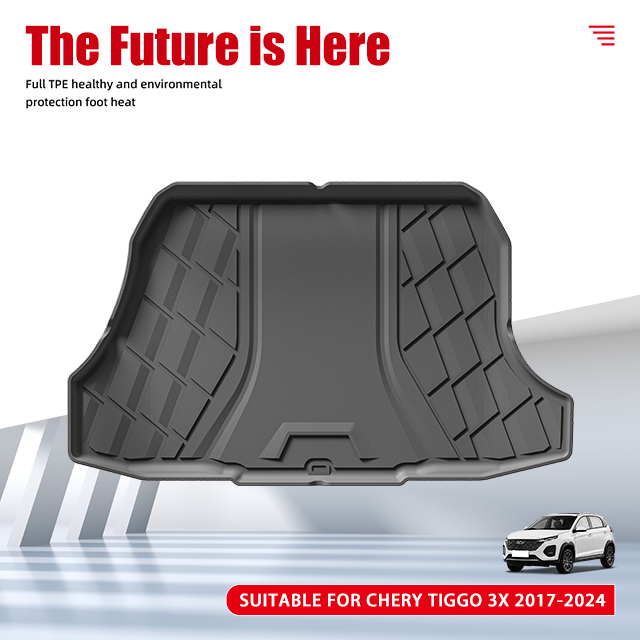
Understanding the structural differences between flat mats and molded liners dictates your success in protecting the vehicle. Flat, flexible mats offer basic surface protection against scuffs and dirt. However, they lack perimeter containment walls. This structural deficit makes them highly susceptible to edge spills. When liquid hits a flat mat, it simply rolls off the sides and into the carpet, rendering the protection useless for anything other than dry debris.
In contrast, a rigid tray-style liner features high, laser-measured outer walls. These raised edges are engineered to trap large volumes of liquid and debris within the tray itself. For grocery transport, a high-walled custom trunk liner is far superior. It prevents raw meat juices or leaking cleaning supplies from bypassing the protective layer, ensuring your vehicle remains pristine even during a major spill.
The verdict for groceries is clear. You need a structural barrier, not just a surface cover. A liner acts as a quarantine zone for your cargo area. If a bottle of bleach leaks on the way home from the store, a flat mat allows that bleach to reach the carpet and bleach the fibers permanently. A molded liner holds the chemical safely until you reach your driveway and hose it off.
Smooth plastics fail to secure groceries. A true non slip trunk mat utilizes engineered tread patterns to grip items. Many premium, hard-plastic molded liners suffer from the slippery liner paradox. They protect the floor but cause groceries to slide around more than factory carpet because the plastic offers zero grip. Look for ribbed, diamond plate, or hex-grid textures. These patterns interlock with plastic grocery bags and reusable tote boxes to prevent lateral movement.
The depth of the texture also matters. Shallow texturing wears down quickly and fills with dirt, losing its grip. Deeply molded patterns maintain their friction coefficient even when partially covered in dust or minor spills. This mechanical grip is what keeps your watermelon from rolling into your eggs when you take a sharp turn.
A reliable waterproof rear trunk mat requires a robust edge design. The ideal raised lip measures between 1 to 2 inches in height. This lip must possess enough structural rigidity to hold a high volume of liquid without collapsing outward under the weight of shifting cargo. If the lip is too soft, a sliding box of heavy groceries will simply fold the edge down and push the spilled liquid over the side.
The engineering behind a 3D rear trunk mat goes beyond the outer lip. Molded channels and deep grooves direct spilled liquids away from the bottom of your grocery bags. This internal topography prevents secondary contamination. If a container of soup leaks, the liquid flows into the lower channels, keeping the rest of your paper grocery bags elevated and dry.
Material thickness and density play a vital role in protecting fragile items. Glassware, eggs, and soft fruits are vulnerable to road vibrations. A dense cargo liner mat absorbs minor impacts against the trunk floor, reducing the likelihood of breakage during transit. The material must be thick enough to dampen the harsh vibrations transferred through the vehicle's suspension.
Trim-to-fit universal mats present significant implementation risks. Cutting a mat to fit compromises its structural integrity. It leaves corners exposed and entirely removes any spill containment walls. Furthermore, thin universal mats tend to bunch up under heavy loads. When you push a heavy case of water across a universal mat, the material folds over itself, creating a tripping hazard and leaving the carpet underneath completely exposed to dirt and damage.
3D-scanned, custom-molded liners provide a distinct technical advantage. Exact fitment prevents the mat itself from sliding, maintaining a secure foundation. Heavy grocery cargo will not cause a properly fitted liner to shift. Underside retention nibs or factory retention post clips lock the custom liner firmly to the vehicle floor, ensuring it stays exactly where it needs to be.
Feature | Universal Trim-to-Fit Mat | Custom 3D Trunk Liner |
|---|---|---|
Fitment Precision | Poor; requires manual cutting, leaving large gaps around wheel wells. | Exact; laser-measured for edge-to-edge coverage matching factory contours. |
Spill Containment | None; cutting the mat removes any raised outer lips. | High; features 1-2 inch rigid containment walls that trap liquids. |
Load Stability | Low; prone to bunching, folding, and sliding under heavy weight. | High; secured by exact dimensions and underside retention nibs. |
Installation Time | High; requires measuring, cutting, and test-fitting multiple times. | Low; drops directly into place with zero modifications required. |
Thermoplastic Elastomer (TPE) and heavy-duty rubber dominate the market for cargo protection. TPE is lightweight, rigid, temperature-resistant, and entirely odor-free. It combines the flexibility of rubber with the structural strength of plastic. Traditional rubber offers high friction but is heavy and carries a potential for chemical off-gassing, especially when new. TPE handles extreme summer heat and freezing winter temperatures without cracking, sagging, or losing flexibility.
Carpeted liners with waterproof backing offer higher aesthetic appeal and sound deadening. However, they present severe trade-offs for grocery hauling. Extracting embedded grocery spills like flour, sticky syrups, or spoiled milk from carpet fibers is incredibly difficult compared to wiping down a TPE surface. Even with a waterproof backing preventing the liquid from reaching the factory floor, the carpeted liner itself will hold stains and odors, requiring heavy scrubbing and chemical cleaners to restore.
When evaluating materials, consider the long-term maintenance. TPE can be removed, sprayed with a pressure washer, and dried with a towel in under five minutes. Rubber takes longer to dry and can degrade if exposed to harsh cleaning chemicals. Carpet requires vacuuming, shampooing, and hours of air-drying time. For a vehicle used weekly for grocery runs, TPE provides the most efficient maintenance workflow.
Inferior mats often curl at the edges over time, especially when exposed to high cabin temperatures during summer months. Edge curling destroys liquid containment and creates a snag hazard for loading groceries. To mitigate this, select materials engineered with reinforced structural ribs that retain their shape under thermal stress. High-quality TPE is specifically formulated to resist this deformation.
Toxic odors from cheap rubber or plastics in an enclosed cabin can contaminate grocery items, particularly fresh produce or baked goods that absorb smells easily. Always check for SGS certification or choose odorless TPE materials to prevent off-gassing and VOC emissions. You should not have to drive with your windows down for a month just to air out a new cargo mat.
Cleaning a cargo mat after a major grocery spill must be efficient. If a mat is too heavy or floppy, you will spill the contained liquid into the trunk while trying to remove it. Follow this workflow for safe extraction:
Clear all dry, uncontaminated groceries from the cargo area first.
Use paper towels to soak up the bulk of the standing liquid while the mat is still installed in the vehicle.
Carefully fold the edges of the mat inward to trap any remaining liquid and debris.
Lift the mat straight up and out of the trunk, keeping it level.
Pressure-wash the mat in your driveway using mild dish soap to break down any grease or sticky residue.
Dry the mat completely with a microfiber towel before reinstalling it to prevent moisture buildup underneath.
Verify your exact vehicle make, model, year, and specific cargo configuration (such as subwoofer placement or third-row seating) before ordering to guarantee laser-measured fitment.
Select a liner manufactured from Thermoplastic Elastomer (TPE) to ensure you get a rigid, high-walled containment area that will not off-gas toxic odors onto your groceries.
Inspect the surface texture of the liner upon arrival to confirm it has deep, aggressive channeling designed to grip plastic bags and elevate cargo above spilled liquids.
Establish a routine maintenance schedule to remove and hose down the liner monthly, preventing abrasive dirt from wearing down the anti-slip texturing over time.
A: A cargo mat is typically a flat, flexible piece of rubber or carpet that protects the floor surface from scratches. A cargo liner is a rigid, 3D-molded tray with raised outer lips designed to contain large liquid spills and perfectly match the contours of the trunk.
A: A 3D rear trunk mat is highly recommended for groceries. Flat mats allow spilled liquids like milk or meat juices to roll off the edges into your factory carpet. The raised edges of a 3D mat contain these spills safely.
A: Hard plastic liners lack surface friction. To prevent sliding, choose a liner made from Thermoplastic Elastomer (TPE) or rubber that features deep, textured grooves or a dedicated anti-slip surface pattern to grip grocery bags and boxes.
A: No, rigid waterproof rear trunk mats should never be placed in a washing machine. They are designed to be removed from the vehicle, hosed off with water, scrubbed with mild dish soap, and air-dried.
A: A custom trunk liner is laser-measured to fit a specific vehicle model perfectly, providing edge-to-edge protection and raised walls. A universal mat is a generic flat sheet that you must cut with scissors, resulting in exposed gaps and zero spill containment.


