
Views: 0 Author: Site Editor Publish Time: 2026-07-23 Origin: Site


Generic floor mats consistently fail to protect modern vehicle interiors. They suffer from severe operational and safety failures, including dangerous pedal interference, persistent edge curling, and inadequate spill containment. Ordering vehicle-specific accessories often introduces significant friction into the purchasing process. Buyers frequently face fitment errors due to unverified vehicle sub-models. Incompatible retention clips and misleading material claims result in compromised interior protection and frustrating returns. You need a reliable framework to evaluate interior protection solutions.
A successful purchase requires evaluating three distinct pillars of product design. First, you must verify exact vehicle architectural data to ensure precision fitment. Second, you need to confirm retention system compatibility to guarantee safety. Finally, you must understand advanced material science, specifically focusing on modern elastomer solutions. Mastering these details ensures your vehicle remains protected under the most demanding conditions.
Material dictates longevity: Thermoplastic Elastomer (TPE) offers superior temperature stability and structural memory compared to traditional rubber or PVC.
Precision requires 3D data: True custom fitment relies on laser-scanned dimensions that account for the dead pedal, seat tracks, and rear footwell tunnels.
Safety hinges on retention: A functional mat must integrate seamlessly with OEM factory mounting posts or buckles to prevent forward migration.
Sub-model variations matter: Hybrid battery placements, AWD drivetrains, and seating configurations drastically alter floor pan architecture, requiring strict verification before ordering.
Visual verification prevents errors: Confirming clip shapes (round vs. oval) and floor designs via photographs with the manufacturer eliminates fitment failures prior to shipping.
Traditional materials degrade rapidly under daily driving conditions. Rubber cracks and stiffens under extreme temperature fluctuations. Factory carpet absorbs moisture easily, leading to hidden mold growth and persistent cabin odors. PVC materials often emit volatile organic compounds (VOCs) when exposed to direct sunlight. These chemical emissions create an unpleasant and potentially unhealthy enclosed cabin environment. You need a material engineered specifically for endurance and safety.
Different solution categories offer vastly different performance metrics. Traditional rubber feels excessively heavy and remains prone to UV fading. It also lacks the structural rigidity needed to maintain high-wall edges. Carpet looks aesthetically pleasing but offers absolutely zero liquid barrier during winter months. Thermoplastic Elastomer represents a massive leap forward in automotive interior protection. It serves as an advanced synthetic compound blending the flexibility of rubber with the durability of plastic.
You must analyze the tensile strength and thermal resistance of a custom TPE car floor mat. This material maintains its exact shape whether facing freezing snow or intense desert heat. Odorless and non-toxic materials matter immensely for enclosed cabin environments. SGS-certified compounds ensure no harmful chemicals off-gas into your vehicle. A high-quality TPE Floor Mat delivers exceptional long-term value. It actively resists permanent deformation, harsh chemical spills, and continuous UV degradation.
Material Type | Temperature Stability | Liquid Barrier | Structural Memory | Odor/Toxicity |
|---|---|---|---|---|
Traditional Rubber | Poor (Cracks in cold) | Moderate | Low | High (Rubber smell) |
Factory Carpet | High | None (Absorbs water) | None | Low (Prone to mold) |
PVC | Moderate | High | Moderate | High (VOC emissions) |
TPE (Thermoplastic Elastomer) | Excellent | Complete | High | None (SGS-certified) |
When evaluating materials, consider the physical demands placed on the driver's side footwell. The constant pivoting of the heel between the gas and brake pedals creates concentrated friction. Inferior materials wear through in months, exposing the factory carpet beneath. TPE compounds resist this localized abrasion while maintaining the flexibility required for easy removal and cleaning.
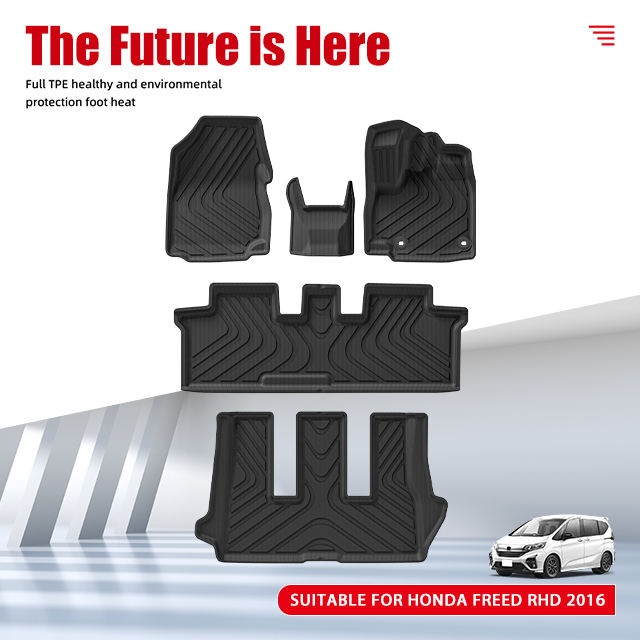
Flat mats fail entirely when tasked with containing kinetic spills. Water and melted snow shift rapidly during sudden acceleration or hard braking. Standard flat designs leave high-wear areas completely exposed to grinding debris. You must understand the fitment paradigm separating true custom designs from inferior alternatives. Deceptive semi-custom options require manual cutting and inherently lack protective raised edges. True molded custom car floor mats eliminate these vulnerabilities through advanced engineering.
Micron-level 3D scanning ensures the mat hugs every single contour of the floor pan. Laser measurement eliminates the tiny gaps where dirt, sand, and salt typically accumulate. High-wall edges define the functionality of a true waterproof car floor mat. Engineers calculate the required lip height, typically ranging from one to two inches. This vertical barrier channels and traps mud and liquid safely away from the vulnerable factory carpet.
Critical coverage zones separate premium options from generic aftermarket accessories. You need full dead pedal coverage to protect the resting area of your left foot. An under-accelerator extension prevents small debris from lodging behind the gas pedal. Continuous rear footwell tunnel protection ensures the entire back row remains pristine. A precision-engineered 3D car floor mat integrates all these architectural features seamlessly.
Consider the specific topography of modern trucks and SUVs. The rear seating areas often feature completely flat load floors when the seats fold up. A poorly designed mat will buckle or interfere with the seat folding mechanisms. Precision 3D scanning accounts for these mechanical clearances, ensuring the mat protects the floor without hindering the vehicle's utility.
Unsecured floor protection creates a severe and immediate safety hazard. A mat that slides forward can easily trap the accelerator pedal. It can also bunch up and block the brake pedal during emergency stops. Matching factory mounting patterns remains non-negotiable for safe operation. A premium non slip car floor mat must feature exact-match grommets. Twist-locks or snap-in buckles must align perfectly with the vehicle's existing floor posts.
Hardware structural differences dictate whether a product functions safely. Automakers utilize wildly varying OEM retention systems across different models. You might encounter round snap-in posts, oval twist-locks, or simple slide-over hooks. Selecting the wrong connector type renders the mat entirely useless and dangerous. You must verify these specific hardware details before finalizing any purchase.
Anti-skid backing technologies provide a crucial secondary retention method. Basic friction-based textured underbellies offer minimal grip on smooth factory carpet. Aggressive nibbed backings grip the carpet fibers firmly without causing permanent tearing or damage. Surface traction matters just as much as bottom retention. Engineered top-channel grooves provide essential shoe traction even when the surface becomes slick with rain or snow.
Inspect the factory floor posts in your vehicle to identify the exact locking mechanism.
Verify the replacement mat includes the corresponding female grommet or twist-lock.
Check the underside of the mat for aggressive, non-damaging anti-skid nibs.
Evaluate the top surface pattern for deep channels that route water away from the pedals.
Ordering interior accessories based solely on the general make and model invites failure. This approach results in high fitment failure rates due to undocumented sub-model variations. Drivetrain differences drastically alter the interior landscape. All-Wheel Drive configurations typically feature a much larger center transmission tunnel than Front-Wheel Drive models. This size difference completely changes the required shape of rear floor protection.
Powertrain variations introduce another layer of complexity. Hybrid and EV battery placements often raise the rear floor pan significantly. This creates a completely different topography compared to internal combustion engine variants of the exact same vehicle. Seating configurations also dictate the required mat architecture. Bench seating, captain's chairs, and center console extensions require specific cutouts and tailored coverage zones.
Mid-year manufacturing facelifts present hidden implementation risks. Automakers frequently alter floor post locations without changing the vehicle's external design or model year designation. Submitting floor pan photos acts as a vital visual verification safeguard. Providing clip layout diagrams to the manufacturer's customer service team guarantees absolute fitment prior to shipping. This simple step eliminates the frustration of receiving incompatible parts.
High upfront costs for premium accessories must be justified by proven long-term durability. Manufacturer support and credibility play a major role in your purchasing decision. Warranty analysis reveals important distinctions between competing brands. Limited lifetime warranties often contain hidden clauses excluding standard wear-and-tear. Comprehensive defect guarantees offer genuine protection for your investment over the life of the vehicle.
Transparent return policies matter deeply when dealing with custom-fit items. You must understand exactly who bears the return shipping cost if the manufacturer's 3D scan data proves inaccurate. The daily maintenance burden also impacts the overall value of the product. Power washing a synthetic elastomer mat takes only a few minutes. Shampooing and extracting traditional carpet drains hours of your time. This represents a highly quantifiable time-saving metric for busy vehicle owners.
When reviewing manufacturer credibility, look for specific certifications regarding material safety. SGS certification ensures the product has undergone rigorous testing for heavy metals and toxic compounds. A reputable manufacturer will proudly display these testing credentials, providing peace of mind for drivers who spend hours inside their vehicles.
Investing in precision-measured, material-engineered interior protection remains a functional necessity. It preserves your vehicle's structural integrity and ensures daily driving safety. Follow a strict operational checklist to secure the right product for your specific vehicle configuration.
Locate your vehicle's exact trim, year, and drivetrain specifications using the VIN.
Photograph your factory floor posts to confirm OEM retention clip compatibility.
Select a manufacturer that explicitly guarantees TPE material construction.
Verify the product features high-wall 3D topography rather than flat, trim-to-fit edges.
A: A universal mat uses generic cut-to-fit rubber that leaves critical areas exposed. A custom mat utilizes laser-measured dimensions to hug every contour perfectly. It provides full dead pedal coverage and features material memory that prevents edge curling over time.
A: No. You must remove all existing factory mats before installation. Layering mats creates a severe safety hazard by causing pedal interference. Factory mats must be removed to properly utilize OEM retention clips and secure the new layer.
A: Hybrid vehicles often feature raised rear floor pans due to battery placement beneath the seats. You must select hybrid-specific SKUs when ordering. Check the manufacturer's configuration tool to ensure it explicitly lists your exact hybrid powertrain.
A: Thermoplastic Elastomer is a highly advanced synthetic compound. It is inherently odorless and completely free of PVC, heavy metals, and volatile organic compounds. It will not emit harsh rubber smells, even when parked in direct summer sunlight.
A: Safety relies on a dual-retention system. The mat must lock into the factory OEM posts to prevent forward sliding. Additionally, it requires high-friction backing to grip the carpet and top-surface traction grooves to keep wet shoes from slipping.
A: Different seating options drastically alter the floor layout. Center consoles, captain's chairs, and specialized seat tracks change the required cutouts for the second and third rows. Accurate seating data ensures the mat fits around these obstacles perfectly.
A: Automakers frequently implement mid-year design changes to retention clip styles without public announcements. Manufacturers use your visual confirmation to identify these hidden changes. This proactive step prevents shipping errors and guarantees exact fitment upon delivery.


