
Views: 0 Author: Site Editor Publish Time: 2026-06-21 Origin: Site


Factory-issued cloth mats look brilliant in the showroom under bright fluorescent lights. However, automotive designers rarely build them to withstand the daily friction of harsh commutes, sudden weather changes, and inevitable cabin spills. Permeable materials constantly absorb moisture. They trap abrasive dirt deep within their woven fibers. Over time, you face persistent interior odors, permanent upholstery stains, and hidden chassis corrosion. These negative factors slowly destroy your cabin hygiene. They also directly slash your vehicle resale value.
Upgrading to a durable waterproof car floor mat completely changes how you manage vehicle care. It shifts your strategy from exhausting, periodic damage control to proactive, permanent interior protection. You will soon learn how to spot the hidden dangers of failing factory carpets. We will also explore advanced material differences. Ultimately, this knowledge helps you select the exact structural design required to master your specific daily driving environment.
Protection vs. Aesthetics: Waterproof mats prioritize spill containment and floorboard preservation, directly defending the vehicle’s resale value.
Material Evolution: Modern solutions have moved beyond heavy, odorous rubber to advanced, lightweight composites.
Structure Matters: The industry standard has shifted from flat "mats" to deep-dish "liners" that offer vertical edge protection.
Safety Imperative: High-quality options feature specific retention mechanisms to eliminate pedal interference.
Many drivers overlook the rapid degradation of standard factory carpets. These porous surfaces easily absorb morning coffee spills and muddy footprints. Once harsh stains set into the fabric, they become nearly impossible to extract entirely. Dealership appraisers immediately notice these permanent blemishes during trade-in evaluations. A foul, lingering odor signals poor maintenance to potential buyers. This negligence automatically triggers significantly lower resale offers.
Standard mats also create a highly dangerous moisture trap. Rain and melting snow soak directly through the thin fabric. The water then pools against the bare metal floorboard. Dark, damp environments violently accelerate hidden rust formation. Mold spores thrive unseen under the thick carpet padding. By the time you notice the damp, musty smell, structural corrosion might already exist.
Let us examine the frustrating recurring expenses. Professional detailing services charge premium rates for deep carpet extraction. You might pay for this specialized service multiple times each year. Compare these repetitive bills against a one-time preventative purchase. Upgrading protects your wallet and guarantees your daily peace of mind.
Buyers often confuse standard mats and modern liners. Understanding this critical structural difference determines your actual level of interior protection.
Traditional flat mats serve as basic, two-dimensional barriers. They sit entirely flat on the floorboard. These options include universal rubber squares or a conventional non-slip carpet car floor mat. They cost less upfront. They work adequately in exceptionally dry climates. However, they lack raised vertical edges. Any significant liquid volume quickly spills over the flat sides. The dirty runoff then inevitably ruins your factory interior.
Conversely, modern engineering introduced precision-molded inserts. We call this structural upgrade the 3D car mat. It features a continuous, raised lip around the entire outer perimeter. It acts as a waterproof basin directly inside your footwell.
This coverage gap matters immensely for daily drivers. Flat mats completely ignore the vertical walls of your footwell. Muddy boots constantly brush against these exposed side panels. A 3D liner extends upward to shield the vulnerable pedal box. It effectively locks loose dirt inside its boundaries until you decide to empty it.
Structural Comparison Chart | ||
Design Aspect | Traditional Flat Mat | 3D Precision Liner |
|---|---|---|
Edge Protection | Flat profile, zero spill containment | Raised walls, basin structure |
Pedal Box Coverage | Minimal to none | Extended vertical coverage |
Dirt Trapping | Debris pushed off edges | Debris locked inside channels |
Best Practice: Always assess your region's annual rainfall accurately. Flat profiles fail rapidly during heavy storm seasons.
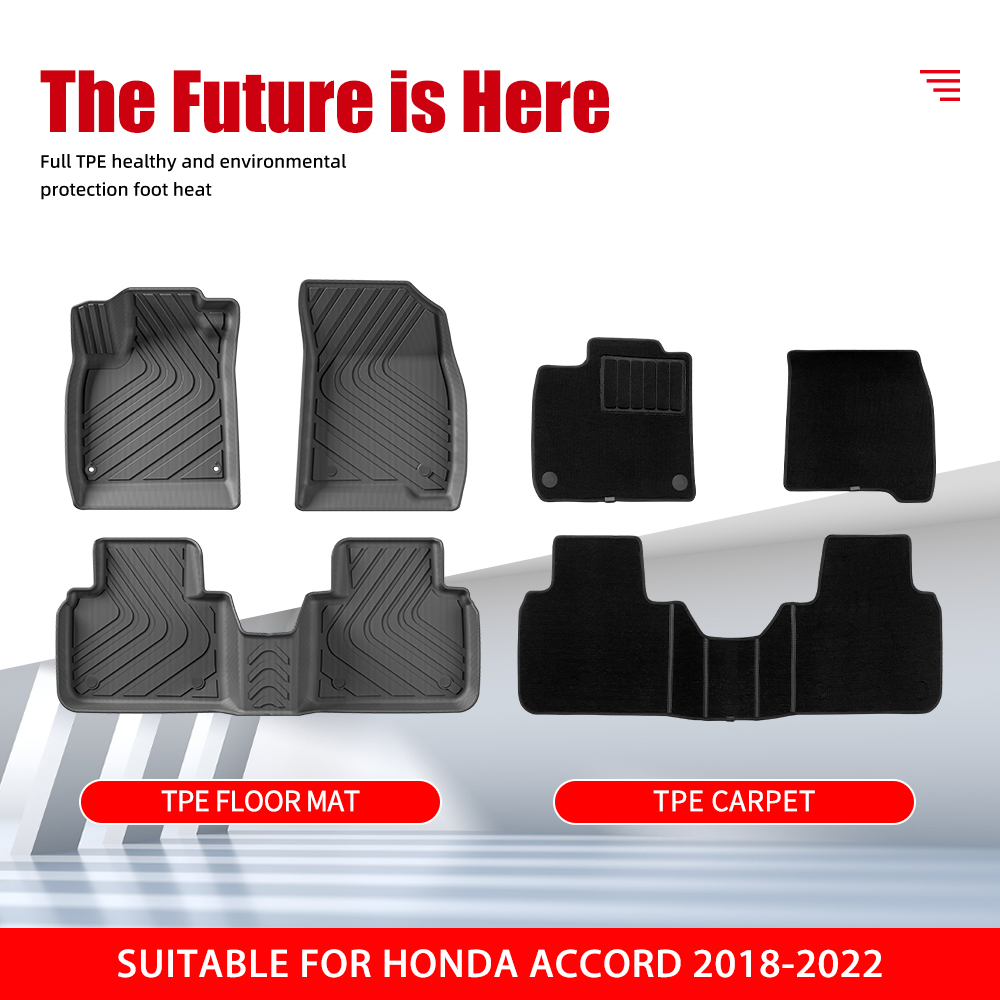
Selecting the correct material dictates both accessory lifespan and daily passenger comfort. Manufacturers rely on three primary material categories.
Traditional all-weather rubber mats remain a popular legacy choice. They feel incredibly heavy-duty. They resist water penetration effectively. However, standard rubber reacts poorly to temperature extremes. It often curls under intense summer heat. It hardens and cracks during freezing winter nights. Furthermore, vulcanized rubber suffers from severe off-gassing. This chemical process releases a strong, unpleasant odor inside a hot cabin.
Thermoplastic Elastomer (TPE) represents the modern industry standard. It serves as the core material for a premium custom TPE car mat. TPE seamlessly combines rubber flexibility and plastic durability. It remains completely odorless. Eco-friendly TPE strictly avoids toxic chemical emissions. It maintains perfect structural integrity across all extreme environmental temperatures. The only minor drawback involves a slightly higher initial purchase price.
Hybrid or coated carpets attempt to offer the best of both worlds. They feature a plush top layer over a hidden waterproof backing. These options appeal to drivers prioritizing luxury aesthetics. However, they only handle mild moisture resistance effectively.
Material Type | Durability | Temperature Stability | Odor Level | Best Use Case |
|---|---|---|---|---|
Traditional Rubber | High | Low (Curls/Cracks) | High (Off-gassing) | Farm trucks, heavy utility |
Thermoplastic Elastomer (TPE) | Very High | Excellent | None (Odorless) | Daily commuting, family vehicles |
Hybrid Coated Carpet | Medium | Moderate | Low | Luxury aesthetics, dry climates |
Common Mistake: Buying heavy legacy rubber for extremely hot climates guarantees a smelly, warped accessory within months.
You must evaluate specific engineering features before finalizing any purchase. Not all accessories offer true interior defense.
First, scrutinize the fitment precision closely. Universal "trim-to-fit" products consistently fail at the edges. You simply cannot cut them perfectly using standard household scissors. High-end brands utilize strict 1:1 OEM floorboard scanning. They map every individual millimeter of the specific vehicle interior using precision lasers. This advanced technology guarantees maximum edge coverage and a flawless factory fit.
Safety and anchoring mechanisms demand equal attention. An unsecured mat creates a lethal driving hazard. A shifting surface might easily wedge itself firmly behind the brake pedal. Top-tier products utilize dense anti-slip undersides. They must also lock seamlessly into the existing factory retention posts.
Next, analyze the channel design and total fluid capacity. Smooth surfaces allow spilled water to roll directly onto your expensive shoes. Advanced surface engineering solves this frustrating issue. Designers implement deep interior ridges and intricate honeycomb patterns. These channels actively trap liquid far away from pant legs.
Finally, verify material compliance and off-gassing standards. Toxic interior odors cause severe headaches, especially in hot climates. Always look for widely accepted international safety benchmarks. SGS-certified materials confidently confirm the total absence of heavy metals and dangerous volatile organic compounds.
Matching the specific product to your unique lifestyle prevents frustrating buyer's remorse. Different environments test interior protection limits uniquely.
High-moisture regions endure relentless rain and heavy snowstorms. Snowy boots drag immense amounts of icy slush into the cabin. Melting ice quickly overwhelms standard permeable fabrics. High-walled waterproof liners expertly contain this rapid snowmelt. The basin structure completely prevents freezing water from soaking the primary cabin carpet.
Family and pet commutes introduce chaotic variables. Children drop sticky juice boxes unexpectedly. Dogs shed coarse hair constantly across the back seats. Porous carpets trap these specific allergens forever. A non-porous surface provides immense relief here. You can simply wipe away fresh spills instantly. Pet hair wipes clean rapidly without requiring an intense, hour-long vacuuming session.
Active lifestyles and harsh work sites demand maximum resilience. Hikers track abrasive gravel inside daily. Construction workers drag heavy mud and industrial grease everywhere. You need a structural barrier capable of intense daily abuse. Transitioning from a messy job site to smooth daily driving becomes stress-free. The protective layer absorbs all the damage, leaving the permanent interior untouched.
Choosing the right product requires a highly structured approach. Follow this logical sequence to guarantee a successful vehicle upgrade.
Step 1: Identify Your Primary Threat. Honestly assess your daily driving environment. Do you need heavy-duty mud containment for weekend off-roading? A deep-dish TPE liner serves you best. Do you merely want basic spill protection for sunny city driving? A quality all-weather flat mat might suffice.
Step 2: Verify Vehicle Compatibility. Never trust vague, universal fitment claims. Always search by your exact Make, Model, and Year. You must also confirm your specific Cab or Seating configuration. Precision guarantees the custom fit required for maximum floor coverage.
Step 3: Evaluate the Warranty and Return Policy. Reputable manufacturers stand firmly behind their engineering. Look exclusively for brands offering lifetime warranties. The policy should explicitly cover curling, cracking, and any subsequent loss of structural shape over time.
Protecting your vehicle requires proactive decision-making. These three simple steps filter out inferior options quickly.
Upgrading your interior defense mechanism requires careful consideration. Here are the core takeaways to guide your final decision:
Transitioning to a premium floor defense system acts as a direct investment in vehicle preservation and passenger safety.
It firmly protects your ultimate trade-in value by eliminating permanent interior stains and hidden moisture damage.
For daily drivers seeking immense longevity, we highly recommend prioritizing a custom-molded TPE 3D liner.
This specific material and structure combination yields the absolute highest long-term return on your initial purchase.
Stop settling for inadequate, porous factory fabrics. Measure your interior, verify your exact model year, and upgrade to a customized waterproof liner today. Proactive protection guarantees a cleaner, safer, and far more valuable vehicle tomorrow.
A: No. For safety and proper fitment, you must remove the factory floor mats before installing custom waterproof liners. Layering accessories causes them to shift unpredictably. This creates severe pedal interference risks.
A: Unlike traditional vulcanized rubber mats, genuine TPE (Thermoplastic Elastomer) is entirely odorless. It will not off-gas, release toxic fumes, or warp under extremely high interior vehicle temperatures.
A: Removal takes merely seconds. They require zero specialized chemicals. Simply hose them down thoroughly. You can use mild dish soap for stubborn grease or dried mud. Let them air dry completely before reinstalling.
A: Rarely. Universal variations lack the raised vertical edges necessary to contain large liquid spills. They also shift during active driving. This creates a potential safety hazard near the pedals. Custom-fit is strongly recommended.


